

The Trump administration is reportedly crafting plans to seize or blockade Iran’s Kharg Island to force Tehran into reopening the Strait of Hormuz
US President Donald Trump appears to be reaching the limits of reason as he realizes that every plan regarding Iran is failing spectacularly, while the Strait of Hormuz remains blocked, sending energy prices soaring. According to revelations from Axios, the White House is reportedly developing plans for a military landing on Iran's Kharg Island, a development that could lead to disaster and drag the planet into a generalized conflict with unpredictable consequences. "We need one month to crush them," sources close to the American President reveal, as thousands of US Marines are being rushed toward the region.
The disastrous US plan
According to reports, the Trump administration is drafting plans to seize or blockade Iran's Kharg Island to pressure Tehran to reopen the Strait of Hormuz. Trump’s failure is becoming increasingly evident: he cannot end the war, at least on his own terms, until he breaks Iran’s control over navigation through the Strait. Meanwhile, global energy prices are spiking. However, an operation to seize Kharg Island—which lies 15 miles off the coast and processes 90% of Iran's crude oil exports—could place American troops directly in the line of fire. Consequently, such an operation would only commence after the US military further degrades Iran's military capability around the Strait of Hormuz. "We need about a month to further weaken the Iranians with strikes, seize the island, 'grab them by the throat,' and use it in negotiations," said a source familiar with White House thinking.
US Marines on the move
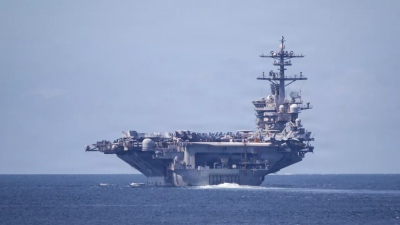
Such an operation, if approved, would require additional troops. In this context, three different Marine units are currently en route to the region. The White House and the Pentagon are considering sending even more forces soon, a US official stated. "He wants the Hormuz open. If he has to seize Kharg Island to achieve that, it will happen. If he decides on a coastal invasion, that will happen. But the decision has not been made yet," said a senior administration official. "We have always had ground forces in conflicts under every president, including Trump. I know this is a media obsession, but the President will do the right thing," a second official noted. For his part, Senator Tom Cotton, head of the Senate Intelligence Committee, stated that Trump was "prudent" not to rule out a ground invasion, though he did not specify if he supports one.
The other side of the coin
Although Kharg Island is critical to Iran's oil industry, there is no guarantee that its capture would convince Tehran to enter a peace deal on Trump's terms. Retired Rear Admiral Mark Montgomery told Axios that such a mission could expose US troops to unnecessary risk: "If we seize Kharg Island, they will turn off the tap from the other side. It’s not as if we would then control their oil production."
Netanyahu: "A ground invasion of Iran is necessary"
Israeli Prime Minister Benjamin Netanyahu also spoke in favor of a ground invasion of Iran. Specifically, he stated that following recent strikes, Iran lacks "uranium enrichment capability." When asked about the situation in the Strait of Hormuz, he said: "We need oil and gas pipelines to the west, reaching our ports in Israel. We must find alternatives, and I believe this is possible." He also set three goals for the military operation against Iran: "First, to crush Iran's nuclear program. Second, to crush the ballistic program. Third, to create the conditions for the Iranians to take their fate into their own hands." Furthermore, the Israeli Prime Minister mentioned that to "finish" the Iranian regime, a ground invasion is required.
Trump's riddle
Meanwhile, US President Donald Trump responded with riddles to scenarios regarding a ground invasion of Iran. During statements in the Oval Office while welcoming Japanese Prime Minister Sanae Takaichi, the American President said: "I’m not sending troops anywhere. But even if I were, I wouldn't tell you. But I’m not sending them."
Shipping in Hormuz drops by 95%
Since the start of the war in the Middle East on February 28, fewer than 100 ships have passed through Hormuz. According to BBC data, daily ship traffic in the region has plummeted by 95%. In contrast, before the war, approximately 138 ships passed through the Strait daily, according to the Joint Maritime Information Centre, carrying one-fifth of the global oil market. Naturally, the risks they take are many. However, about one-third of the transits in the area were conducted by ships linked to Iran. These include 14 ships flying the Iranian flag, as well as others subject to sanctions due to suspected ties to Tehran's oil trade. Nine more ships belonged to companies with addresses linked to China, while six had a declared destination of India.
At the same time, analysis shows that several ships with no direct connection to Iran have docked at the country's ports, including vessels belonging to Greek companies. Some ships that manage to cross this specific sea area appear to follow longer routes than usual. Tracking data for a Pakistan-flagged tanker shows it sailed near the Iranian coast during its transit on March 15, instead of the usual central route. Bradley Martin, a senior researcher at the American defense think tank RAND Corporation, stated the ship was likely "responding to instructions from Iran." He says its course could suggest the presence of mines or an effort by Iranian authorities to make the ship more easily identifiable. By forcing ships to change course, they enter Iranian territorial waters and become subject to Tehran's maritime rules, says Michelle Wiese Bockmann from Windward Maritime Analytics.
www.bankingnews.gr










Σχόλια αναγνωστών